Why can losing money make someone want to gamble again?
Why does another bet feel like a way to fix the problem the previous bets created?
Why can someone see what gambling is taking from their life and still struggle to stop?
And when does wanting to win become feeling unable to walk away?
He Just Wanted His Money Back
That night, he intended to spend only a small amount of money.
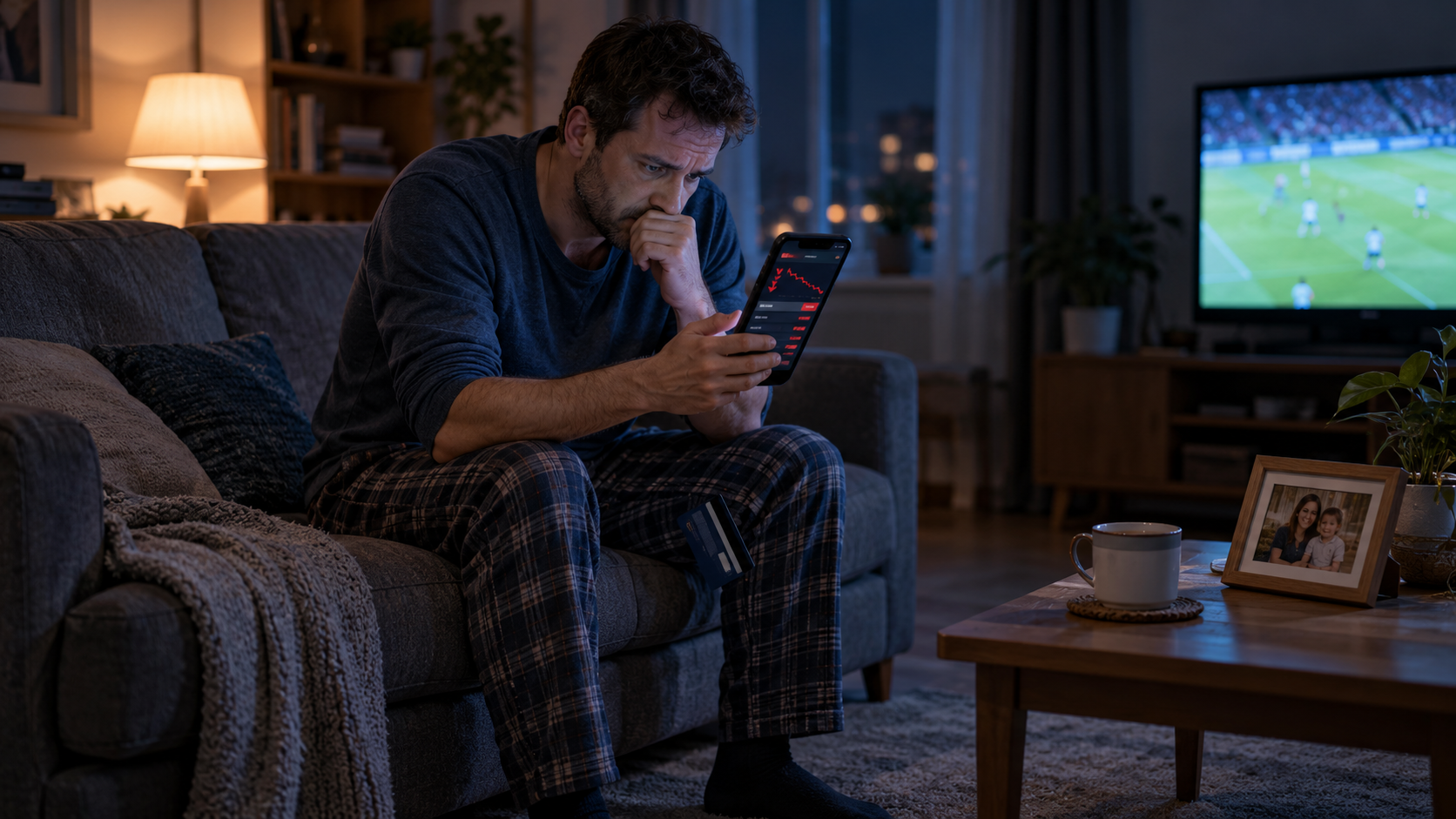
He opened his gambling app while sitting beside his wife watching TV. At first, they were chatting. He placed a bet, put his phone down, and looked up when she asked him something.
He lost.
He added more money to his account.
He remembered another evening when he had won back what he had lost. Maybe tonight would turn around too.
His wife asked if he was coming to bed.
“Give me a minute.”
He was no longer thinking about the amount he had intended to spend.
He was thinking about how much he needed to get back.
A small win brought relief.
He could still recover the money.
Then he lost more and felt sick.
Stopping would mean facing how much he had lost. Placing another bet allowed him to imagine that he could still put things right.
He told himself he would stop once he got back to where he had started.
The amount he needed to recover kept increasing.
Inside the Mind: What’s Happening Underneath?
The reason someone gambles can change while they are doing it.
They may begin because they enjoy the excitement or hope to win some money.
After losing, their thinking can shift.
“I want to win something.”
Becomes:
“I need to get my money back.”
This is called chasing losses: continuing or returning to gambling to try to recover money already lost.
The imagined win may also offer relief from guilt, shame, or a conversation they are afraid to have with their partner.
As long as they keep playing, they can tell themselves there is still a chance to fix everything before anyone finds out.
But the money has already been lost. Another bet risks more money. It does not undo the previous loss.
Someone may understand that and still struggle to act on it when getting the money back feels urgent.
Why an Occasional Win Can Keep Hope Alive
Someone who loses repeatedly may still remember their wins clearly.
The unexpected payout.
The evening that turned around.
The relief of recovering money they thought was gone.
Those memories can come back when they are deciding whether to continue.
“It happened before. It could happen again.”
Unpredictable wins can keep the possibility of a reward feeling important. Someone does not have to win regularly to keep anticipating the next win.
The man knew he was losing that evening.
But he was remembering the night he had recovered his money.
Both things could be true in his mind: gambling had cost him money, and another bet still felt worth trying.
When Almost Winning Feels Like Getting Closer
A slot machine stops one symbol away from a payout.
“I was so close.”
A near-miss can feel more encouraging than an obvious loss. Research using simulated slot machines has found that near-misses can increase the desire to keep playing.
But in a game where each round is independent, almost winning does not improve the chances of winning the next round. Neither does losing several times in a row.
Someone may know they have lost and still feel that they are getting closer.
That difference matters.
The feeling of progress can keep them playing even when their balance shows that they are losing money.
Why Knowing Better May Not Be Enough
Someone can understand that gambling is not a reliable way to make money.
They might even give that advice to someone else.
But while trying to recover a loss, their attention may narrow around one thought:
“What if this bet fixes it?”
They give less attention to the other possibility.
Losing more.
Owing more.
Waking up with a bigger problem to explain.
Stopping can feel unbearable because it means accepting that the money is gone. Continuing keeps the possibility of recovery alive, even while making further harm possible.
Gambling disorder can impair someone’s ability to control their gambling. Knowing the facts does not necessarily remove the urge or make stopping easy.
That does not erase responsibility for harm. It helps explain why someone may need treatment and practical barriers, rather than another reminder that gambling costs money.
Sometimes Gambling Offers an Escape Before It Creates a Problem
For someone whose days feel lonely or empty, gambling may become one of the few things they look forward to.
The next match. The next game. The possibility that something exciting might happen.
Others gamble because it briefly draws their attention away from stress, sadness, or worries they do not know how to manage.
That does not mean gambling is giving them a dependable source of purpose or relief. It means it may have come to occupy that place in their life.
Then losses create more distress.
Someone may return to escape their original problems and the problems gambling has added.
They can continue even after the enjoyment has faded. They want relief, want their money back, or want to postpone facing what happened.
Not everyone gambles for these reasons. Understanding the person matters more than assuming that every bet is an attempt to escape emotional pain.
The Opportunity Is Always Nearby
Online gambling can make opportunities feel constantly available.
The same phone someone uses to message their partner or check work emails can also give them immediate access to another bet.
Some games move quickly, leaving little time between a loss and the next decision. Promotions and notifications may bring gambling back to mind after someone has decided to stop.
Products differ, but access, advertising, and game design can all influence continued play.
The explanation is not only about what happens inside the person. Their surroundings matter too.
For the man on the sofa, another bet required a few movements of his thumb.
Putting the phone down meant facing something he had been trying to avoid.
When Shame Makes It Difficult to Tell Someone
“I’ll tell them once I’ve won it back.”
That promise can delay an honest conversation.
Someone may hide statements, minimize losses, or borrow money without explaining why. In some cases, they may take money without permission.
They may fear being judged or losing the trust of someone they love.
But hiding what is happening also prevents others from understanding the situation and protecting shared finances.
The longer it continues, the more there may be to explain.
Understanding why someone conceals their gambling does not make deception or taking money acceptable.
Their partner deserves accurate information about money they share. They may need independent support and boundaries around lending or access to funds.
They should not have to keep paying for losses to prove they care.
When Gambling Becomes More Than a Bad Evening
One losing evening does not, by itself, establish gambling disorder. It can still cause harm if the money was needed for food, rent, or other essentials.
A broader concern develops when someone struggles to control gambling, repeatedly tries to stop without managing to, chases losses, conceals what is happening, or continues despite serious consequences.
They do not have to lose everything before receiving help.
Someone may still go to work, care for their family, and meet many responsibilities while gambling increasingly occupies their thoughts.
From the outside, life may seem much the same.
Privately, they may spend hours thinking about bets, debts, and how to recover what they have lost.
What Changes When the Goal Is No Longer Winning It Back?
Someone may continue wishing they could recover the money for a long time.
They do not have to stop wanting it back before getting help. The change is recognizing that more gambling is not a reliable way to repair the loss.
Treatment can help someone understand their triggers, examine beliefs about winning, and respond differently to urges. Cognitive behavioural therapy is one recommended approach.
Practical measures can help too. Self-exclusion, blocking gambling websites and apps, restricting gambling payments where available, and getting debt advice can make it harder to act on an urge.
These measures can support recovery, although they may not be sufficient on their own.
The man could tell someone before he had recovered any money.
He could explain what had happened while still feeling ashamed.
There might be difficult financial decisions and trust to rebuild. Those problems deserve support too.
If gambling-related distress leads to thoughts of suicide or feeling unable to stay safe, urgent help is needed.
Nobody has to resolve their debts before they deserve care.
The Truth
Some people keep gambling while losing because another win begins to represent a way out.
An earlier win keeps that hope alive. A near-miss makes success feel close. Shame makes stopping and telling someone feel harder.
The man on the sofa wanted to return to the beginning of the evening.
Before he added more money.
Before the losses grew.
Before he had something he was afraid to tell his wife.
Another bet could not promise him that.
He could put his phone down without having fixed everything.
He could tell her what happened and ask for help with what came next.
He could not change the bets he had already placed.
But the rest of his life did not have to depend on the next one.
Dr. Jabir Jassam is a practicing physician in Canada with additional qualifications and extensive training in psychiatry. He holds a Postgraduate Diploma in Psychiatry from the Royal College of Physicians of Ireland and a Master’s degree from the University of Melbourne. He has authored several books on ADHD, OCD, panic disorder, burnout, and other mental health topics, combining medical evidence, psychiatric knowledge, and clinical experience.